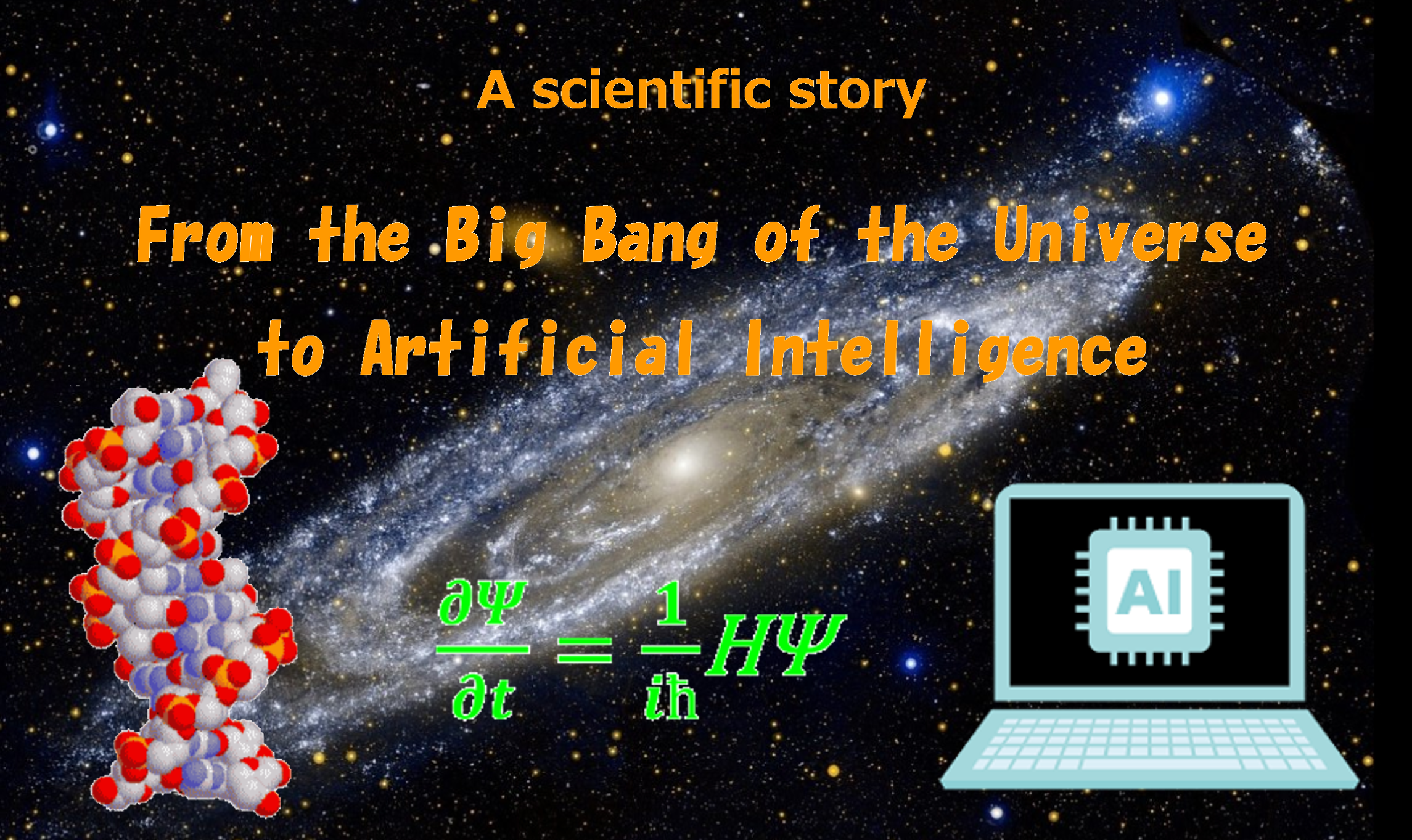
This “Storytelling” is a message to the young boys and girls who will be responsible for the future of the human world. “From the formation of the current cosmic world to the birth of the earth, the birth and evolution of life, and the journey of humanity to the present,” in other words, it is a great achievement that has been revealed after a lot of struggle mainly by scientists, and I hope that you will understand and reaffirm it, and use it as a foundation for thinking about the path we should take in the future.
It should be noted at the outset that the contents of each “section” of this narrative are heavily referencing the original works (translated versions) listed in the bibliography, and the originality of the descriptions should be attributed to those books. Rather, what I focused on was the fact that the themes written by each of the original works were reconstructed in an easy-to-understand manner, connected along a time axis, and woven into a single “story.” By doing so, we may have been able to make it a little easier to see the world we live in. If this story has any originality, I think it is precisely in this respect that it can be recognized.
The story begins with “Part I : The Birth of the Universe and Its Composition.” The origin of our universe was a spectacular explosion called the “Big Bang.” However, current science does not know exactly what exactly triggered the Big Bang or what existed before it. Here, the astonishing “Inflationary Cosmology” is presented, which states that about 13.8 billion years ago, the spacetime of the universe we live in has expanded to 10,000,000,000,000,000,000,000,000 times during the period of about 0.00000000000000000000000000000001sec (31 zeros after the decimal place) immediately after its birth, and then the composition of the universe that was created is discussed. The matter we know (or perceive) is only about 5% of the entire universe, such as stars, planets, and all objects on their surfaces, 27% is “dark matter” which is something unknown, and the remaining 68% is “dark energy” whose properties are largely unknown. It is this dark energy that is thought to be driving the expansion of the universe.
This is followed by “Part II: The Birth and Primitive Evolution of the Earth,” which discusses “The Birth of the Solar System and Its Structure” followed by “The Birth and Primitive Evolution of the Earth.” Seawater exists on the earth, and 70% of the surface becomes oceans, and plate tectonics (a theory that explains various phenomena that occur near the earth’s surface, such as seismic activity and volcanic activity, by the movement of bedrock several tens of kilometers thick called “plates”)began to operate. The subduction has altered the oceanic crust through the medium of water brought into the Earth’s interior, and at the same time, andesitic magma is produced, which has created the opportunity for the birth of an innovative organic system called “life” on Earth.
In response to this, in “Part III: The Birth of Life,” it is becoming clear that the birth of life is not a discontinuous manifestation, but is realized from the integral accumulation of continuous phenomena in a specific environment.It is revealed that life is deeply related to the flow of energy. In other words, “energy is the cornerstone of the evolution of life,” and the characteristics of life evolution can be understood only when energy is brought into the equation. Moreover, it is not only evolution, but this relationship between energy and life goes back to the beginning of life. The fundamental nature of “life” is that it inevitably emerges from the imbalances that arise on the planets that are constantly active (the “dissipative structure”). Life was born through the flow of energy, and the “proton gradient” was the key to the emergence of cells.
Next, “Part Ⅳ: The Evolution of Life” is discussed. First, the “mechanisms that nurture life and their history” are explained. Then, following the major upheaval of the “appearance of oxygen” caused by cyanobacteria, the emergence of eukaryotes is introduced, which eventually led to the development of “multicellular organisms”. Furthermore, the narrative describes how experiencing a “frozen Earth” (known as “Snowball Earth”) contributed to the birth and evolution of animals. Many of the “phylums” of animals up to the present day, including “arthropods”, first appeared in a relatively short period of time, from about 530 million years ago to 520 million years ago. This phenomenon is called the “Cambrian Explosion”, and the connection between this phenomenon and the “true polar migration”, which is a change in the position of the earth’s axis relative to the entire crust, is discussed. The correlation between animal diversification and oxygen concentration is then examined, and animal development, i.e., “the land expansion of animals” and the “age of arthropods”, are mentioned. However, the development of animals did not continue smoothly, and the decrease and deficiency in oxygen concentration at the end of the Permian period, 252 million years ago, and hydrogen sulfide produced by sulfate-reducing bacteria caused a “mass extinction” in which 90% of all species were estimated to have become extinct. In addition, oxygen concentrations were lower than today throughout the long period of the Triassic, and this hypoxia, especially after the mass extinction, increased the diversity of new forms of organisms, resulting in the largest number of new forms since the Cambrian. The Triassic period is recognized as comparable to the Cambrian period, which is important for animals, and this period of rapid diversification of life is called the “Triassic explosion”. Most of the new animal species born from this oxygen-deficient situation had a respiratory system that was highly adaptable to the oxygen crisis. On land, two new groups emerged from the harsh environment: “mammals” and “dinosaurs”. The former replaced the theropods, while the latter took over the world. The “bipedal system” of early dinosaurs evolved as a response to the hypoxic environment of the mid-Triassic, that is, they overcame the restriction of breathing due to “Carrier’s constraint” by adopting a bipedal posture. In other words, the low-oxygen environment of the Triassic period was the driving factor, and this new regime was formed, resulting in the birth of dinosaurs and the establishment of dinosaur hegemony in the hypoxic world. On the other hand, the Mesozoic oceans changed over time due to the effects of global warming, but the “ammonites” and “inoceramus” that symbolized that time may still be alive if circumstances permit. However, about 65 million years ago, the Chicxulub asteroid (up to 10~15 kilometers in diameter)collided with the Earth, causing more than half of the species that existed on Earth at the time, including dinosaurs, to become extinct at the time. A large “impact crater (Chicxulub crater)” discovered in Mexico’s Yucatan Peninsula was formed during this period. However, it has been found that the extinction was not triggered only by a single event such as an asteroid impact, but also by the release of large amounts of greenhouse gases such as methane, carbon dioxide, and sulfur dioxide into the atmosphere by an eruption on the Deccan Plateau before the impact, which drastically changed the Earth’s climate and environment, and triggered a mass extinction. The Deccan Trap weakened the world, and a meteorite put an end to it. On the other hand, the diversification of mammals, the most noticeable change, the increase in size, occurred immediately after the extinction of the dinosaurs. Over the next 270,000 years, mammals diversified and grew in size. However, it was not until about 55 million years ago that mammals that could be called truly large appeared. At that time, the temperature of the earth was rising rapidly, forests spread around the world, and trees grew near the polar regions of both the north and south. This may have encouraged a significant expansion of mammalian diversity. Furthermore, in the case of birds, the beginning of the bird is the “Archeopteryx” that appeared about 150 million years ago. However, there are two main views on the origin of birds, namely that birds evolved from diptera (reptile-like animals) other than dinosaurs, and that birds evolved directly from dinosaurs. Over the past decade, the discovery of numerous bird fossils, primarily from Cretaceous rocks dated between 130 million and 115 million years ago in China, has confirmed the “Dinosaur Origin Theory”.
Finally, we look at the phylogenetic tree of human evolution. It is now quite well understood, and the history of the family to which we belong, “Hominid”, probably began 6 million ~ 5 million years ago. Since then, nine species of hominids have been identified, but the most important hominid in the early pre-Pleistocene period is “Homo habilis” (meaning “dexterous human”), which was named for its ability to use tools. It is the oldest species of the genus Homo, which appeared about 2.5 million years ago. About 1.5 million years ago, “Homo erectus” was born from Homo habilis, and from Homo erectus we finally derived “Homo sapiens”, but it is thought that it was born as a direct descendant of erectus about 200,000 years ago, or evolved through an intermediate stage called “Homo heidelbergensis”. Homo sapiens was further subdivided into a number of variants. While some researchers treat “Neanderthal” as a variant, others interpret it as a separate species called “Homo neanderthalensis”, the latest evidence suggests that the lineage of humans and Neanderthals diverged before the advent of modern humans and our current DNA. Therefore, Neanderthals did not originate from us, nor vice versa. Both evolved from a common ancestor that was already extinct, so their ancestors were distinct from either species. According to the fossil record, the oldest known member of our species (sometimes referred to as “modern humans” to distinguish it from the more primitive “Homo sapiens”) lived 195,000 years ago in what is now Ethiopia. Soon, however, the group traveled far south of the African continent and then northward, from Africa to the Eurasian continent and gradually spread throughout the world. As a result, these wanderers cut themselves off from the rest of the world and adapted to the environments they found themselves in.
In Parts Ⅲ and Ⅳ, we have taken a closer look at how life came into being and evolving. And when we look at the complexity and diversity of life observed across time and space, it can sometimes seem as if life represents something fundamentally different from its physical actions. While the structure of the abiotic world is predictable and appears to be formed on simple principles, we tend to imagine that life has evolved beyond such principles. However, the fact is that at every level of the collective of living organisms, the “laws of physics” provide a particular solution to life. The outcome is not always predictable, but it is not infinite. Regardless of the level at which the laws of physics are at play, from particles to the size of a population of organisms, the results are varied but not infinite.
Therefore, I would like to take a short detour and touch on “Part V: The Physical Laws of Life Evolution”. The accumulation of evidence from the outstanding work of a number of researchers can show the extent to which physical principles limit the scope of evolution at each level of the structure of life. This view is based on a simple thought: “evolution is the act of the environment acting as a filter to select the components of an organism, in which the complex laws of physics are optimized to enable successful reproduction”. The “environment” here includes everything that can interfere with reproduction, from storms to predators’ appetites. In short, “evolution” is nothing but astonishing and interesting interactions brought about by physical principles that are encoded as genetic material. And the limited number of physical laws expressed in mathematical formulas means that the results of evolution are also finite and universal at the same time. Furthermore, if there is a close relationship between physics and biology, if we assume that extraterrestrial life exists, they may be strikingly similar to life on Earth, and terrestrial life may be a template for most of life in the entire universe rather than a singular entity born in a single experiment in evolution. Also, at least in our world, it is an unavoidable point of view that “having a ‘cell’ is one of the characteristics of living organisms.” This is because having cells not only created a cohesive mechanism, but also made it possible to select and eliminate a wide variety of cells in the evolutionary process. In this sense, “cells” and “evolution” are deeply connected. Therefore, if we take a closer look at the membrane of each cell and its surroundings, we find that all life forms on Earth that are capable of self-replication have a “membrane” that acts as a “bag” that envelops everything inside. This membrane is not just a sheet-like compound, but has a structure like a microscopic bag, and the molecules that form the membrane have amazing properties and simple beauty. Contained inside the membrane are “molecules with heads and tails”, and while the tail is a long chain of carbon atoms connected to each other and has “hydrophobicity”, the head is “hydrophilic” and easily soluble in water. In other words, a molecule has two extreme properties: hydrophobic at one end and hydrophilic at the other. When this molecule is added to the water, the tails of the different molecules are positioned so that they face each other and the head is facing the water. The “two-layer structure” formed by these molecules is formed spontaneously, with the tail avoiding water based on its hydrophobicity, while the head facing water exhibits its hydrophilicity. This lipid membrane has other surprising features. Rather than forming an infinite sheet floating in the water, the membrane naturally becomes spherical without external stimuli and traps the liquid inside, as if to minimize energy, that is,”surface tension”. Due to this, one compartment of the cell appears. Behind the arrangement of lipids and the characteristic that lipids tend to form spheres are the physical principle of “ionic interaction” that works between molecules, and the tendency to “minimize energy”, which leads a long chain of molecules to “cell bags”. This is another typical example of how the laws of physics offer specific solutions to life.
So far, we have looked at the essence of the changes on Earth over the past billions of years and the evolution of life on Earth. In the next part, “Part VI: The Emergence and Evolution of Mankind,” we will discuss “the process by which humans evolved from the ancestors of apes in the past 5 million years” and “How humans have increased their potential and spread throughout the world in the past 100,000 years,” and in “Part VII: Synopsis and Achievements of the Civilization Built by Mankind,” ” Civilizations that have emerged one after another in the last 10,000 years”, “New trends of commercialization, industrialization, and globalization that have occurred in the last 1,000 years”, and “In the past century, How humanity has come to understand this epic origin story.”
As for the origin of mankind, there is a branch of the tree of evolution called “hominins”. They form part of a broader fauna group of primates, and the closest living species is the “chimpanzee”, suggesting that the divergence between humans and chimpanzees began about 13 million years ago and interbreeding continued until perhaps 7 million years ago. Eventually, however, the evolutionary histories of both sides diverged, with the emergence of the current “chimpanzees” and “bonobos” on the one hand, and several different species of hominins on the other. Our own species, “Homo sapiens”, is just one branch of it. So, how did the “evolution of hominin” develop? It is worth noting that all the major steps of its evolution took place in “East Africa”. During this period, the results of tectonic processes: “mountain-building in the Himalayas”, “blockade of the Indonesian sea route”, and especially “the uplift of the high ridges of the ‘East African Rift Valley'”, dried up East Africa. The emergence of the “rift valley” altered not only the climate but also the terrain, transforming the ecosystem of the region. East Africa has transformed from flat land covered with tropical forests to rugged mountainous terrain with plateaus and deep valleys, and vegetation has diversified from cloud forests to savannas and desert scrublands. Prolonged aridity in East Africa, fragmentation of forest habitats, and replacement of savannas have resulted in a divergence from arboreal primates to hominins. However, this was not the only factor. The Great Rift Valley has been greatly complicated by tectonic movements, and a variety of topography has formed adjacent transition zones. These include forests and grasslands, ridges, steep cliffs, hills, plateaus and plains, valleys, and deep freshwater lakes formed in the valley floor of the Great Rift Valley. The area was called the mosaic environment, and it provided the hominin with a variety of food sources, livelihoods, and opportunities. About 4 million years ago, “Australopithecus (the ape of the south)” appeared, and it began to have traits common to modern humans, such as a tall and delicate body shape. This was despite the fact that the skull was still in its primitive shape, and it had also become adept at bipedal walking. “Australopithecus afarensis (Afar ape-man)” is well known from extant fossils. Among them is the astonishingly complete skeleton of a woman who lived in the Awash River valley about 3.2 million years ago, known as “Lucy.” About 2 million years ago, all the hominin species of Australopithecus became extinct, and our own genus, the “genus Homo”, appeared. The “Homo habilis” retained a delicate figure similar to that of the previous ape-man, but only its brain was slightly larger. It wasn’t until Homo erectus appeared about 2 million years ago that the size of the body and brain increased significantly, and the way of life changed significantly. Homo erectus was very similar anatomically to modern humans in body structure below the skull, and had a shoulder structure that was adapted to run long distances and had the ability to throw objects. It is said that they also had something in common with other humans, such as slow growth, a long childhood, and advanced social behavior. Homo erectus is presumed to have been the first hominin of the genus Hominins of the genus Hominins to lead a hunter-gatherer lifestyle and to be able to handle fire. It is thought that fire was used not only to keep warm, but also to cook food. They may also have had the ability to cross large bodies of water using rafts.
On the other hand, the Earth, the land where hominin is active, entered the current “Ice Age Epoch” about 2.6 million years ago. During this period, the Earth’s orbit and the tilt of its axis of rotation, known as the “Milankovitch cycle”, have changed regularly, alternating glacial and interglacial periods. East Africa was too far from the North and South poles to come face-to-face with the advancing ice sheet itself, but it was still greatly affected by this cosmic cycle. In particular, the “eccentricity cycle”, in which the Earth’s orbit around the Sun periodically extends in an elliptical shape, has brought about an era of great change in the climate of East Africa. In each of these phases, the pulse of the earth’s axis also accelerated, and the climate oscillated between very dry and humid conditions. As mentioned earlier, East Africa was uplifted by mantle plumes rising from the ground, which resulted in the stretching of the earth’s crust and eventual cracks and faults。 The resulting topography of the Great Rift Valley is characterized by a flat valley floor with a large amount of crust subducted and ridges towering on either side. Especially from 3 million years ago, a number of large isolated basins were formed at the valley floor, and when the humidity was sufficient, these became lakes. These deep lakes are important. This is because it provided a stable source of water for hominin even during the dry season. However, many lakes are temporary, and as the climate has changed, lakes have appeared and disappeared over time. The terrain with the rifts creates distinctly different climatic conditions at high altitudes and valley floors. Rain falls near the high cliffs and volcanic peaks, and then flows into lakes scattered across the valley floor, which are much hotter and have a higher evaporation rate. This means that lakes in the Great Rift Valley are highly dependent on the balance of precipitation and evaporation, and even the slightest climate change can cause significant and rapid changes in their water levels. Compared to lakes around the world and other parts of Africa, the range of variability is significant. These lakes are called “Amp Lakes” because the slightest change in the local climate can raise and lower the water level of these bodies of water, which are essential for life, so much. This is because it acts like a high-fidelity amplifier that amplifies weak signals. And these special “amp lakes” are an important link between the long-term tectonic trends that create the rift valley and the rapid changes in the global climate and the habitable environment that have had a direct and dramatic impact on human evolution. Over the past few million years, the environment in East Africa has been generally very dry, but even this general condition has been subject to periods of extreme change, with periods of great humidity and periods of severe dryness again. These climate changes occur in cycles of about 800,000 years, during which Amp Lake flickers and disappears like a loose light bulb. With this change, the situation of water sources, vegetation, and food also fluctuated greatly, which had a profound impact on our ancestors. The rapidly changing circumstances made the multi-talented and adaptable hominin more viable, and thus evolved a larger brain and more intelligence. The three most recent periods of extreme climate change occurred between 2.7 million and 2.5 million years ago, 1.9 million to 1.7 million years ago, and 1 million to 900,000 years ago. Scientists who have examined the fossil record have found that new species of hominin (genus Homo) tend to coincide with the times of their appearance and extinction in times of these wet and dry fluctuations, often associated with increased brain capacity. For example, one of the most important events in human evolution occurred during a period of change, from 1.9 million years ago to 1.7 million years ago. The seven major lake basins in the Rift Valley (the part of the lake that was filled with water) were repeatedly filled with water and dried up. Various species of hominin reached their peak, and Homo erectus, with its greatly increased brain capacity, also emerged during this period. In conclusion, 12 of the 15 known species of the genus Homo first appeared during these three periods of change. In addition, the development and diffusion of stone tool technology at each stage – Oldoin, Ashur and Moustier – also corresponded to periods of eccentricity when climate change became extreme. It is believed that the period of change not only influenced human evolution, but also drove several species of the genus Hominia to leave their birthplace and “migrate to the Eurasian continent”. About 1.8 million years ago, Homo erectus spread throughout Africa, and then, after several waves of migration, it left the continent and spread throughout Eurasia. This species existed for about 2 million years. Homo erectus gave birth to “Homo heidelbergensis (Heidelbergian)” about 800,000 years ago, followed by “Homo neanderthalensis (Neanderthals)” in Europe and “Denisovan” in Asia 250,000 years ago. Experts disagree on whether these archaic humans are a separate species from humans. Anatomically, “Homo sapiens”, defined as modern humans, first appeared in East Africa between 300,000 and 200,000 years ago. Thus, only about one-tenth of the time that Homo erectus existed since the birth of our species as “modern humans”.
About 100,000 years ago, the Earth’s orbit was aligned in a specific position. Due to the tilt of the Earth’s axis, the Northern Hemisphere summer began to coincide with the period when the Earth was farthest from the Sun in an elliptical orbit, which meant that the northern summer would be cooler. The snow that fell in winter did not melt, and the snow cover continued to increase. As the Earth entered the next glacial period, the northern ice sheet increased and expanded southward. Thus, this most recent glacial period, and the resulting decline in the world’s sea level, provided a decisive opportunity for humanity to spread around the world. On the other hand, the most surprising result of global genetic research is the fact that “the human species is extremely homogeneous”. Although there are regional differences in hair, skin color, and skull shape, genetic diversity among the 7.5 billion humans currently living in the world is very scarce. Moreover, since human genetic diversity is the richest in Africa, it is clear that all human beings began in Africa and spread from the place of their birth. We are all “children of Africa,” but none of us stayed in our birthplace. About 60,000 years ago, our ancestors began to disperse from Africa to other parts of the country. Furthermore, genetic studies suggest that humans now distributed around the world are not descended from multiple waves of migration, but “descended from a one-time exodus from Africa, whose early migrants were probably only a few thousand.”
Modern humans, Homo sapiens, are thought to have first entered the region when the climate was humid and the Arabian Peninsula was green. It is not clear whether they traversed the Sinai Peninsula northward or crossed the Bab el-Mandeb Strait by raft. As it began to spread into Eurasia, our ancestors may have come into contact with other species of the genus Homo that had left Africa early. Modern humans interbred with “Neanderthals” in the Middle East, to some extent, and inherited traces of their DNA, which they carried with them as they migrated to other parts of the world. It is also believed that when they passed through Central Asia, they interbred with a mysterious species of the genus Homo, which is extinct, called the “Denisovans”. “Homo erectus”, an older species of the genus Homini, left Africa about 2 million years ago and reached China and Indonesia. However, it was already extinct by the time humans spread throughout Asia. The spread of humans from the Arabian Peninsula along the southern coast of Eurasia in China was progressing at a rate of less than 500 meters per year. Yet, in the end, humanity occupied the earth. Neanderthals and Denisovans, who are close relatives of the genus Homo, became extinct. It is more likely that they simply lost the competition to humans than that they became extinct by hunting or killing. Or it could not have withstood the harsh environment that occurred at the peak of the Ice Age. The last Neanderthals disappeared between 40,000 and 24,000 years ago, leaving us as the only surviving genus of humans on Earth. Within 50,000 years of their migration from Africa, humans settled on every continent except Antarctica, making them the most widespread animal species on Earth. Skills such as the use of fire, the making of clothing, and the manufacture of tools have allowed us to live in all climatic zones, from the tropics to the tundra, from the savannah apes. The fact that its global expansion occurred in the midst of the frigid climate of the last glacial period may come as a surprise to many. In reality, however, it was this Ice Age environment that made the large-scale spread of humanity possible. This is because the expanding ice sheet in the north has taken in large amounts of water from the ocean, which has lowered sea levels and exposed much of the continental shelf. It was precisely because of this ice age that people were able to walk overland to Indonesia, across narrow straits to Australia, and most importantly along the Bering Land Bridge to the Americas.
“Anatomical modern humans” appeared about 200,000 years ago, but the behavior of our ancestors became modern between 100,000 and 50,000 years ago. At that time, humans had the same language and cognitive abilities as we do today, forming social groups, making tools, and mastering the art of using fire. They began to carefully bury the dead, make clothing, and create expressive works of art, depicting themselves and the natural world around them in cave paintings, as well as bone and stone carvings. They were skilled hunters, catching fish, collecting edible plants extensively, and even milling grain into millstones. As mentioned above, modern humans started in Africa about 60,000 years ago and spread to all corners of the planet. However, the first lasting steps towards agriculture and sedentary life were taken about 11,000 years ago, a process known as the “Neolithic Revolution”. The North American ice sheet was shrinking rapidly, but by the time the first crops were domesticated in the fertile crescent of the eastern Mediterranean, and soon after in the Yellow River basin in northern China, more than half of Canada was still covered in ice. Over the next few thousand years, our ancestors began the same process in other parts of the world, and agriculture appeared in the Sahel region on the southern edge of the Sahara Desert in North Africa, Mesoamerica, the Andes=Amazon region of South America, the forests of eastern North America, and New Guinea. After surviving the last ice age for 100,000 years of hunter-gatherer life, as the earth warmed, people in different parts of the world began to follow the path of “agriculture and civilization”, which permanently changed humanity. The birth of civilization did not depend solely on the “cultivation of plants”. The “domestication of wild animals” also played an important role. Once domesticated, other products and labor can be obtained continuously, but this use is something that cannot be done with wild animals, and livestock farming provides a whole new resource. This is called the “secondary product revolution.” The domestication of large animals also provided another important resource that was not available to hunter-gatherer societies. It is muscle strength as a “working animal for transportation and traction”. By harnessing the traction of livestock, farmers were able to shift from manual farming, which used small agricultural tools such as hoes and digging sticks, to the use of “karasuki”. Moreover, horse-drawn chariots revolutionized war in Eurasia in the second millennium BC. Later, when larger, more powerful horses were bred and could be mounted, mounted soldiers became the most efficient weapon of war. The use of animal muscle power has greatly expanded the potential of human society. Long-distance trade and travel across different environments were made possible by horses, mules, and camels. Animals such as oxen and buffaloes, which were strong but slow-footed, were also used as traction to pull four-wheeled carts and harpoons. Then, in the 5th century, when the “cervical girdle harness” was invented in China, horses could also be used for traction. This was an advance that greatly increased agricultural productivity in the Middle Ages on the heavy lands of northern Europe. The domestication of these animals to supplement human strength was the first step in human exploitation of energy sources on a large scale. For more than 6,000 years, animal power was a major driving force in civilization until the Industrial Revolution and the introduction of fossil fuels. With the onset of the Industrial Revolution, coal-fired steam engines began to power trains and ships, and later internal combustion engines, which used liquid fuel refined from crude oil as a driving force to travel vast distances at incredible speeds.
Up to this point, we have surveyed the cosmic, astronomical, geological, and biological evolution that forms the foundation of our existence as humans: the “birth of the universe and its composition,” the “formation and structure of the solar system,” the “primordial evolution of the Earth,” followed by the “origin of life,” and the “evolution of life — the mechanisms and history that nurtured life, the emergence of oxygen, the appearance of eukaryotes, the rise of multicellular organisms, the birth and evolution of animals, the diversification of animals and the role of oxygen concentration, the colonization of land by animals, mass extinctions and the Triassic explosion, the dominance of dinosaurs in a low-oxygen world, the extinction of dinosaurs, the age of mammals, and the age of birds.” We have also touched upon the “emergence and evolution of humankind.” Finally, in “Part VII : A Synopsis and the Achievements of Human Civilization,” let us summarize our current position as human beings from the perspective of civilization.
In the larger framework of human history, not much has actually changed in the past 5,000 years. Like people 5,000 years ago, we have families, schools, governments, religions, wars, and peace. Celebrations of births and mourning for deaths continue unchanged. Sports, weddings, dances, jewelry, tattoos, fashion, gossip, social class, and even fear, love, joy, happiness, and delight are all universally found in all cultures and will be with us forever. If you think about it this way, humanity has not changed much in principle. Surprisingly, we are very similar to our ancestors. Even though the background of the times has changed, we have changed only slightly. On the contrary, it is safe to assume that real change has occurred only three times in human history. All of these changes have been brought about by technology. It is not one particular technology, but a series of interrelated technologies that have fundamentally, sustainedly, and biologically changed us. These three major changes are all of them, and based on them, a fourth change, “AI”, is emerging.
First of all, a long time ago, one of the greatest epochs in human history, and the first major turning point, came. That is the “invention of language”. So, let’s go back to this epoch and think about its significance. “Fire” was “the first multifunctional technology in history.” Fire became a source of light and provided safety for animals from fear of fire. In addition, the fire was portable and could be moved to cold areas while keeping warm. However, the greatest achievement of fire was that it made it possible to “cook food”. This achievement was most important because it greatly increased the number of calories that could be consumed. In other words, fire has paved the way for us to “outsource” some of the digestive processes that take place in our bodies. Even if raw food is ingested, most of it passes through the body undigested. Therefore, it is difficult for modern humans to cover the calories necessary for survival with raw foods alone. So what did our ancestors use these massive calories for? The answer is the “brain”. They put this energy into it to evolve a brain of unparalleled complexity. As a result, humans have acquired three times as many neurons as gorillas and chimpanzees in a short period of time, and a luxurious 20% of total caloric consumption is used solely to support this sophisticated brain. From a survival standpoint, this was a pretty bold gamble, but it paid off, and we created another new technology : “language”. Language is indeed a giant leap forward, and according to historian Will Durant, “Language has made us human.” Thus, “fire” was the starting point of the long, long story that we and “technology” are still weaving together, and the even more powerful technology that was born from it, “language,” made it possible for us to “exchange information.” In addition, “language” has made it possible to cooperate, which can be said to be one of the special abilities of human beings. A dozen non-linguistic humans are no match for a single mammoth, but if they can cooperate with each other using language, they will become powerful. Our cerebrum produces language, and thinking through language creates a virtuous cycle in which the cerebrum develops further. This is because there are certain thought patterns that cannot be achieved without the use of words. Words are basically symbols that represent thoughts, and without the art of speaking, it is unclear how to process complex combinations and changes in thought. Language has given us yet another great gift. It is a “story”. “Story” gives shape to the “imagination” that we needed in the first place to progress, and it is the most important element for human beings.
Our ancestors lived as hunters and gatherers, engaging in conversation for about 100,000 years (the “First Age”), before undergoing a dramatic transformation: they invented “agriculture”. This has radically changed humanity itself and society as a whole. This “Second Age” began about 10,000 years ago. Agriculture was as much a technology as language and, like language, facilitated many other advances. One of them is the birth of the “city”. In order to carry out agriculture, it was necessary to settle in one place, so cities developed. This was a completely new endeavor. The second technological advance that has come along with agriculture is the “division of labor”. Its significance may be difficult to understand intuitively, but the division of labor has become one of the most important milestones in human history. The division of labor made it possible for one person to specialize in a specific task without having to do all the work necessary for one’s own survival. This led to efficiency and laid the foundation for explosive economic growth. The “division of labor”, along with “trade” and “technological progress”, was one of the three means by which the labor could be increased without increasing the amount of labor in order to increase the wealth of the whole. Agriculture did not directly cause the division of labor. Agriculture gave rise to cities, and cities gave rise to the division of labor. Another important technology that cities have created is the “weapon” used in organized warfare. Weapons are a technology that emerged from the need to defend cities where wealth was concentrated. Early cities were protected by walls, the construction of which required a great deal of labor and cost. This indicates that there was a sufficient risk that the city would be the target of the attack. With the development of agriculture and the emergence of cities, for the first time in history, humans “own land.” Since humans are inherently territorial species, there is no doubt that there were areas that claimed ownership of the land. However, archaeological evidence, in which territorial boundaries were clearly set, appears only in the early second period. The philosopher Jean = Jacques Rousseau saw this as the beginning of modernity, stating: “The moment when one person claims a particular piece of land as his own, and others accept it, is the moment of the true founding of a political society.” With the development of agriculture and the increase in individual land ownership, the economic equality seen in the First Era came to an end. Natural inequalities in ability, birth, and luck have led to an “unequal accumulation of wealth”. This would have been unthinkable in hunter-gatherer societies, but the combination of cities and agriculture created a means for those in power to maintain control by giving them food. Under these circumstances, people began to be divided into “rulers” and “ruled.” The emergence of nobility and royalty is also characteristic of this second period.
We said that the first requirement for human progress was “imagination.” And the second thing that was needed was brought about by agriculture. The invention of agriculture was also the invention of the “concept of the future”, because planting, growing, and harvesting grain required a “planning ability” that had nothing to do with it during the hunter-gatherer lifestyle. This was the second necessary condition for the progress of mankind. The “Third Age” began only 5,000 years ago with the invention of “writing” by the “Sumerians”, who lived in what is now southern Iraq. Writing was invented independently in Egypt and China at the same time, and later in present-day Mexico. The advent of writing revolutionized humanity. It has become possible to preserve the knowledge acquired by a person during his or her lifetime even after he or she dies. Knowledge was completely copied and transported around the world. As a result, ideas were able to survive outside the human mind. Writing was a major turning point in human history. The first and second epochs are prehistoric, and “history began in the third era, 5,000 years ago.” As with the important technologies discussed so far, behind the emergence of writing was a new technology that created it and made it possible to make more effective use of it. One of them is the “wheel”, which was also invented around 5,000 years ago. Wheels and letters go well together, like peanut butter and jam. The combination of the two led to the development of commerce, the distribution of information, and the realization of people’s travel. The advent of writing made it possible for rulers to create a “code of laws,” and it was the wheel that made it possible to spread the code widely. It was also in the third era that “money” appeared. Although the emergence of modern minted coins can only be seen through more time, coins in the form of gold, silver, shells, and salt have existed all over the world since the early days of the Third Age. The metal was generally recognized for its value, divisible, durable, and portable, so it was considered an ideal currency. Metallurgical technology began as early as the Third Age, and people quickly learned that when copper and tin were mixed, “bronze” was produced with superior properties to each. With the simultaneous appearance of “letters, wheels, and money” in the world, the basic materials for creating a “nation and empire” were prepared. Here, for the first time, large-scale civilizations flourished simultaneously all over the world. Powerful, rich and cohesive states emerged in China, the Indus, Mesopotamia, Egypt and Central America. It is still unclear why these civilizations emerged at about the same time and so far from each other. The same applies to the appearance of letters. No one knows why writing, wheels, and agriculture didn’t develop anywhere in the world 50,000 or 20,000 years ago. In any case, our ancestors had acquired “language”, “imagination”, “division of labor”, “city” and “sense of the future” at this point. There were also “letters”, “legal codes”, “wheels”, “contracts” and “money”. All of this allowed us to rapidly develop our technology over the next few thousand years. Our world was in its third age until recently. In the meantime, there have been many revolutionary advances, such as the “development of the steam engine”, the “use of electricity”, and the “invention of type”, but they have not fundamentally changed the way humans live in the same way as language, agriculture, and writing. It can be said that the main innovations that occurred in the third era were not revolutionary, but evolutionary. In order for us to truly believe that we have entered a new era, “something has to happen that will drastically and forever change our existence and our lives”, and “we need something that will change the course of our journey and evolution as a species”. Thus the story that advances us into the “Fourth Age” begins in the last centuries of the Third Age.
In 1620, Francis Bacon published “Novum Organum – A New Institution”. This is said to have been the beginning of what we now call the “scientific method.” Bacon emphasized the importance of studying nature with your own hands, and of carefully observing and recording data along the way. It was argued that it is possible to draw conclusions only on the basis of the data so obtained. Although this is not entirely consistent with the scientific method as we think it today, Bacon was credited with “systematizing the acquisition of knowledge through observation” and “proposing its methodology.” It was a great idea that changed the world. Human progress up to that point had been intermittent and inefficient, for example, the phrase ‘reinventing the wheel’ is not just a metaphor – wheels have, in fact, been invented multiple times throughout history. By using the scientific method, data collected and conclusions drawn by one person can be used by others, making it possible to further develop that knowledge. That is, our scientific knowledge began to grow exponentially, and that is the reason we exist as we do today. Today’s scientific methods consist of “a universal method for acquiring knowledge” and “a method of publishing the acquired knowledge in a form that can be verified by others and further stacked on top of it.” This method applies only to measurable objects and phenomena. What is important here is that it can be measured objectively. This is because the results of objective measurements can be reproduced (or not) by other researchers. The scientific method required inexpensive and reliable printing techniques. Therefore, science may not have progressed before this period. As printing costs fell, scientific progress accelerated. Based on the work of others, make improvements step by step. Newton described this process as “standing on the shoulders of giants.” Above all, the invention and spread of the printing press improved literacy and made it possible for information to flow freely. This was the main impetus for the beginning of the modern era in the 17th century.
As the scientific method accelerated technological development, strange properties common to all technologies became apparent. “The performance of technology continues to double repeatedly at regular intervals over a period of time.” It was only half a century ago that this profound and mysterious nature of technology was discovered. Gordon Moore, one of the founders of Intel, noticed an interesting fact that the number of transistors on an integrated circuit doubles about every two years. He noted that this phenomenon had continued consistently, and predicted that this trend would continue for at least the next decade. This conjecture became known as “Moore’s Law”. That’s where Ray Kurzweil came in and found something surprising. It is a fact that computers have been doubling their performance at the same pace since long before the invention of the transistor. Beginning with a simple electromechanical device used in the U.S. Census in 1890, a graph of the processing power of computers reveals that from the beginning, regardless of the underlying technology, the processing power has doubled approximately every two years. This is a truly bizarre phenomenon. Despite the transition of fundamental computer technologies from mechanical to relay-based, vacuum tubes, and then to integrated circuits, there has never been a moment when Moore’s Law was broken. Why? As a matter of fact, no one knows the answer. Why does the processing power that determines the speed of a computer obey this strict law? At the moment, no one knows the truth, and there are almost no hypotheses. However, it is conceivable that this may be some kind of cosmic law. A certain amount of technology is required to reach a specific goal, and after that technology is obtained, the technology may be used to further double the technology. But here’s where it really gets interesting. A surprising fact is that “almost all technology, not just computers, obeys Moore’s Law”. While the performance of all technologies does not necessarily double every two years, it can be said that some of the elements that support technology do indeed double every certain years. The phenomenon of “technological doubling (powers of two)” is far more significant than it might initially seem. The combination of the scientific method and Moore’s mysterious law has led to the explosive development of new technologies that have become essential to our daily lives. Advances in robotics, nanotechnology, gene editing technology, spaceflight, nuclear power, and many other advanced technologies are staggering. In fact, technology is advancing so fast that we no longer realize its wonders. The speed at which new technologies are arriving is so fast that it seems like a matter of course.
By the way, one of the technologies that appeared at the end of the Third Age and had an overwhelming influence was the “computer”. A computer is not just a tool, but a “device of deep philosophical significance”. What does that mean? Computers perform only one peculiar function: “calculations”. It goes without saying, but “calculation” is the beating of the heart of the universe, the second hand of the clock of the universe. Some people think that computation is so fundamental that the brain, the universe, space, time, consciousness, life itself, in short, everything is computational. Polymath Stephen Wolfram was one of those who thought so, and in 2002 he published his 1,200-page monumental work “A New Kind of Science,” Wolfram Media Inc., and is developing his own theory with. Much of the universe can be expressed by mathematical formulas. Hurricanes and DNA can be described by mathematical formulas, as can snowflakes and sand dunes. And the beauty of this fact is that anything that happens in the physical world that can be expressed in a mathematical formula can be modeled in a postage-stamp-sized calculator. For example, transporting a human to the moon would require mind-bogglingly complex calculations about rockets, boosts, gravity, and other things in the physical world. But at the same time, it also means that it can be simulated by arranging 0s and 1s in a small processor. An important truth implied by this fact is that everything that can be modeled by a computer also occurs in the real world according to mathematical formulas. The launch of Apollo 11 was described in a mathematical formula. This does not simply mean that mathematical formulas were used. The launch itself was based on a mathematical formula. The Apollo program itself was based on mathematical formulas. From this point of view, “we have to ask whether humans themselves can be described in mathematical formulas, whether our minds are giant machines that follow the same basic rules that Apollo 11 followed.” If we want to understand the limitations of computers (if they exist), we need to answer these questions. In this sense, the computer is a philosophically important device. A hammer simply hammers a nail or a saw cuts wood, but a computer can reproduce a myriad of phenomena in the physical world. It may be argued that we have not yet fully understood the essential meaning of computers. Computers have dramatically changed our world, but transformations beyond appearances are underway. Marshall McLuhan, a prominent professor and philosopher, said decades ago: “Computers are the best piece of clothing, the most technologically advanced devices in human history, the devices that expand our central nervous system, and compared to this, wheels are just hula hoops.” Computers are new, but they are already everywhere, and it is difficult to imagine what computers will be capable of in 10 years, let alone 100 years. Where did computers come from? How did we come up with the idea of making something like this, and how did we decide to make it? The history of computers from the birth of computers to the present day is quite short, and for the purposes of this article, it is sufficient to mention four names: “Babbage”, “Turing”, “von Neumann”, and “Shannon”. Summarizing their major achievements one by one, Charles Babbage showed that “machines can calculate” and Alan Turing showed that ” Machines can perform not only calculations, but also programs”, John von Neumann devised “how to assemble hardware”, and Claude Shannon showed that “software can be used to perform seemingly mathematical problems”. That’s where we are now.
We are now in an era of “the beginning of the fourth age from the third age that is coming to an end.” In each era, our ancestors have “outsourced some of their physical and mental functions with technology.” For example, they began to use “fire” to aid digestion, “letters” to expand memory, and “wheels” to reduce the burden on their backs and legs. As time progressed, the “mechanical brain” was born. The device is versatile and programmed to be able to answer every question we ask infinitely. Currently, we are developing a means of guiding devices to function autonomously, that is, “artificial intelligence (AI)”, and with the help of “robotics”, we have begun to give artificial intelligence the ability to move on its own and interact with the physical world. The combination of computers and robots has the potential to outsource more of our thoughts and actions. This is a tremendous change. It is this change that heralds the beginning of a fourth, new era. However, the problems that this change poses to us are difficult to solve. This is because it is related to “what does it mean to be human?”. “Can machines think? Can machines possess consciousness? Is everything that humans do reproducible with machines? In fact, are we machines, too?” Are we already in a new era, a fourth era? However, what is important here is not when the fourth era began, but that once we enter this era, change accelerates rapidly. It took 5,000 years from the invention of the wheel to the moon landing. However, we were not halfway to reaching the Moon 2,500 years ago, even though that was halfway in terms of time. The arrival on the moon was still a long way off. The first successful flight above the speed of sound was made only 20 years before the moon landing. The first flight by airplane was 60 years before the moon landing. In other words, for 4,940 years after the invention of the wheel, we lived glued to the ground, but in just 60 years after that, we were able to fly and travel back and forth to the moon. “The fourth change we are facing is expected to come at such a rapid pace with a series of dramatic and innovative breakthroughs.” And just as an airplane shakes the most just before landing, the changes to come can also be accompanied by big shaking. Perhaps more changes will occur in the next 50 years than has occurred in the last 5,000 years. As Vladimir Lenin once said, “Sometimes nothing happens for 10 years, and sometimes in a few weeks 10 years’ worth of events happen.”
By the way, what is the latest technology, “artificial intelligence”? Those who discuss this technology often take into account “narrow AI” and “broad AI”, two very different concepts. However, at present, all artificial intelligence that has been realized is “narrow AI”, which is also called “weak AI”. We still only know how to build this kind of artificial intelligence. That said, narrow AI can also be surprisingly useful. Narrow AI grants a computer the ability to solve a specific problem or accomplish a specific task. On the other hand, “broad AI” has three names: “general AI”, “strong AI”, and “artificial general intelligence (AGI)”. All of these names have the same meaning, but we will use “AGI” here. AGI is an artificial intelligence that has human-like intelligence and can do anything. At this time, AGI does not exist. There is no consensus on how AGI can be created, or whether it is possible to create AGI in the first place. In addition, the basic method for creating “narrow AI” is roughly divided into three methods: “creating a model”, “asking an expert”, or “learning from data (“machine learning”)”. Since the optimal approach depends on the specific problem to be solved, none of these methods alone can be considered the “correct” way to build AI. However, while each of these three methods is a legitimate way to create AI, the field of “AGI” is completely different, and a completely new approach may be required to realize it. In other words, the design of AGI, which requires solving problems that are not set, may be fundamentally different from the design of AI, which only needs to solve a specific range of problems. The most suitable shape for AI is considered to be a shape that can directly interact with the physical world, that is, a “robot”. In fact, it is thought that it will be difficult for AI technology to evolve beyond a certain level unless it is given a physical body and can learn through interaction with the external environment. The technology for building advanced robots has been evolving steadily, albeit somewhat slowly, alongside the development of new alloys, high-performance batteries, advanced sensors, and more efficient methods of locomotion. However, the field of robotics has begun to gain traction not so much because of these advancements themselves, but because of the anticipation that something special will happen by combining robots with high-performance AI that is currently under development. In other words, our next goal is to realize an “AI robot” that can interact with our living environment.
On Earth, a tiny existence in the infinite darkness, we, the last and only surviving human beings, have evolved in a single, fragile but solid system and built our own civilization. Now that we have entered the era of “robots and AI”, the speed of evolution of the technologies that support civilization is accelerating, and we are working toward the realization of “AGI = autonomous systems that can affect our own existence”. We may be at the most important turning point in human history.
Bibliography
1.We Have No Idea
A Guide to the Unknown Universe
Authors:
Jorge Cham
He is a comic strip (multi-panel comics published in newspapers and magazines) artist and has been drawing “Piled Higher and Deeper” for over 18 years. Since 2008, the book’s website has been viewed more than 50 million times and has 7 million readers per year. His work has appeared in the New York Times, The Washington Post, The Atlantic, Scientific American, and other publications. He holds a Ph.D. in robotics from Stanford University and has been a faculty member at the California Institute of Technology.
Daniel Whiteson
After working at the University of Pennsylvania, he is currently a professor of experimental particle physics at the University of California, Irvine. In the past, experiments were conducted with the proton = antiproton collider at Fermilab near Chicago, and now he is also conducting research at CERN (European Organization for Nuclear Research), which is known for the Large Hadron Collider (LHC), a circular accelerator with a total circumference of 27 kilometers. In January 2016, in collaboration with Cham, comics and videos about science were aired on PBS (Public Broadcasting Service in the United States), earning over one million PVs (Page View, a unit of measurement for website traffic indicating the number of pages actually accessed by visitors). The two of them have been called “the best teachers in the world.”
Publisher: Riverhead Books, U.S.
Published: May, 2018
2.Iwanami Shinsho (New Red Edition) 543
History of Life and the Earth
Authors: Shigenori Maruyama
Born in Tokushima Prefecture in 1949
Graduated from Tokushima University in 1972
Present – Professor, Faculty of Science, Tokyo Institute of Technology
Major – Geology, Tectonics
Books – “What has the Earth done for 4.6 billion years?” (Iwanami Shoten)
“New Earth History” (co-authored with Yurindo)
Yukio Isozaki
Born in Shiga Prefecture in 1955
Graduated from Osaka City University in 1978
Present – Professor, College of Arts and Sciences, The University of Tokyo
Major: Geology, Life History
Publisher: Iwanami Shoten Co., Ltd.
Published: April 24, 2012, 21st printing
3.THE VITAL QUESTION
Why Is Life the Way It Is?
Author: Nick Lane
University College London (UCL), Department of Genetics, Evolution and Environment. Programme Leader at UCL Origins of Life. In 2015, he received the Biochemical Society Award. His other books include Life Ascending: The Ten Great Inventions of Evolution, Profile Books/W.W. Norton, 2009. Power, Sex, Suicide: Mitochondria and the Meaning of Life, Oxford University Press, 2005. Oxygen: The Molecule that made the World, Oxford University Press, 2002 . He is the co-author of Life in the Frozen State, CRC Press, 2004. He is also an acclaimed science book author, and Life Ascending won the Royal Society’s 2010 Science Book Award.
Publisher: Profile Books, London
Published: 2015
4.A NEW HISTORY OF LIFE
THE RADICAL NEW DISCOVERIES ABOUT THE ORIGINS AND EVOLUTION OF LIFE
ON EARTH
Author: Peter Ward, Ph.D.
He is a professor of biology at the University of Washington in Seattle and a professor of earth and space sciences.He has also appeared in numerous documentaries. In 2009, he created an eight-hour television series called Animal Armageddon.
Joseph Kirschvink, Ph.D.
He received his Ph.D. from Princeton University. Nico and Marilyn Van Wingen Memorial Professor of Geobiology at the California Institute of Technology. He is known for discovering “Snowball Earth” (freezing the entire earth). He also pointed out the large-scale movement of the Earth’s axis of rotation, which led to the discovery of microscopic magnetic materials used by animals for navigation and the evolution of living organisms.
Publisher: Bloomsbury Press
Published: 2015
5.THE EQUATIONS OF LIFE
The Hidden Rules Shaping Evolution
Author: Charles Cockell
He was a professor of astrobiology at the University of Edinburgh, UK, and was a member of the UK Centre for Astrobiology. He is also the director of the institute. He holds a degree in Biochemistry and Molecular Biology from the University of Bristol and a PhD in Molecular Biophysics from the University of Oxford. He is interested in extremophiles, the possibility of life in extraterrestrial environments, space exploration and space colonization. He has also worked at NASA’s Ames Research Center, the British Antarctic Research Institute, and the Open University. In addition to more than 300 scientific papers, he is the author of many books, including “An Inconvenient Life.”
Publisher: Atlantic Books
Published: June 28, 2018
6.ORIGINS
How the Earth Made Us
Author: Lewis Dartnell
He is a researcher at the UK Space Agency at the University of Leicester in the UK, specializing in astrobiology. He is involved in a project to search for traces of life on Mars. He has won numerous awards for his science writing and has written for The Guardian, The Times, and New Scientist magazines. He has appeared on BBC TV’s Horizon and Sky News, Wonders of the Universe, Stargazing Live and The Sky at Night. His 2014 book, “How to Create a Scientific Civilization After the World Disappears,” became an international bestseller.
Publisher: The Bodley Head
Published: 2018
7.The Fourth Age: Smart Robots, Conscious Computers, and the Future of Humanity
Author: Byron Reese
CEO of technology research firm Gigaom. In addition, he is the founder of several high-tech companies. He has spent most of his life pondering the relationship between technology and human history. Patented and pending in a wide range of fields such as crowdsourcing, content creation, and psychographics. His website, which spans a wide range of fields including technology, business, science, and history, has been accessed by more than 1 billion people to date.
Publisher: Simon & Schuster Audio
Published: 2018
8.LE MYTHE DE LA SINGULARITÉ
Author: Jean-Gabriel Ganascia
Philosopher. He is a professor of computer science at the University of Paris VI. For more than 20 years, he has been the head of ACASA, a team that conducts research on artificial intelligence such as cognitive models and machine learning at the university’s Institute of Informatics. Since September 2016, he has been Chairman of the Ethics Committee of the French National Center for Scientific Research. In recent years, he has expanded his interest in cross-disciplinary fields such as ethics in the IT society, political philosophy, and digital humanities.
Publisher: Éditions du Seuil
Published: February 2, 2017